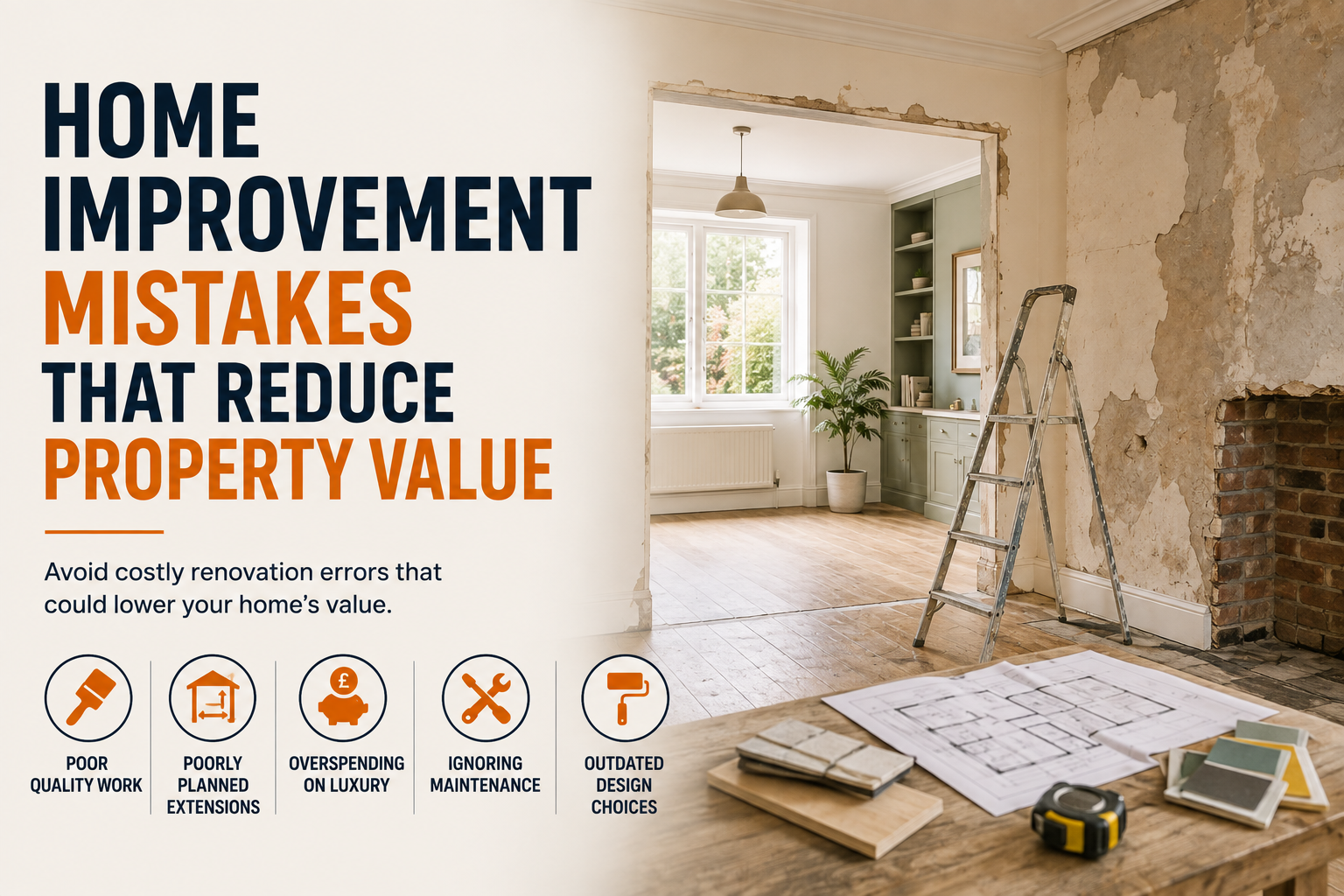
Home improvements can make a property more comfortable, practical and attractive. The right work may also increase its value when the time comes to sell. However, spending money on a renovation does not automatically mean your home will become more valuable. Some improvements add little value, while others can actually make a property less attractive to future buyers.
The key is to think beyond personal taste. Good home improvements should balance your needs with practical design, build quality, energy efficiency and the expectations of the local property market.
1. Removing Too Many Bedrooms
Creating a large bedroom, dressing room or home office may sound appealing, but combining two bedrooms can sometimes reduce the property’s value.
Bedroom numbers are important when buyers compare similar homes. Turning a three-bedroom house into a two-bedroom property could place it in a different part of the market.
Before removing a bedroom permanently, consider whether the improved space will compensate for the loss.
2. Poorly Planned Extensions
An extension can be an excellent investment, but simply adding floor space is not enough.
A poorly designed extension may create:
- Dark internal rooms
- Awkward layouts
- Narrow access routes
- Reduced garden space
- Poor connections between rooms
- Insufficient natural light
The extension should feel like part of the original home rather than an addition that has been attached without considering the existing layout.
For properties in Norwich and across Norfolk, it is also worth considering the character and typical size of homes within the local area.
3. Spending Too Much on Luxury Improvements
Installing the most expensive kitchen, bathroom or flooring does not guarantee the same amount will be added to your property’s value.
Imagine spending £40,000 upgrading a kitchen when buyers in the area generally expect a good-quality kitchen costing considerably less. You may enjoy the improvement, but recovering the entire cost when selling could be difficult.
Choose materials and finishes that suit the value and style of the property.
4. Ignoring Essential Maintenance
One of the biggest mistakes is spending heavily on cosmetic improvements while ignoring basic maintenance.
A beautiful kitchen will not reassure buyers if the property has a leaking roof or serious damp problem.
Prioritise problems such as:
- Roof leaks
- Damaged tiles
- Blocked or broken gutters
- Damp
- Drainage problems
- Deteriorating brickwork
- Faulty electrics
- Plumbing leaks
A well-maintained property often creates more buyer confidence than one filled with expensive finishes but obvious defects.
5. Poor Quality DIY Work
DIY can save money when the homeowner has the necessary skills. Poor workmanship, however, is usually easy to notice.
Uneven tiling, badly fitted flooring, rough plastering, visible sealant, poorly installed doors and unfinished decoration can make buyers wonder what other work has been completed incorrectly.
Electrical, structural, plumbing and other specialist work should also be completed by appropriately competent professionals where required.
6. Making the Property Too Personal
Your home should reflect your personality while you live there, but highly unusual permanent features can limit its appeal when you sell.
Bold decoration can usually be repainted. Structural changes are harder to reverse.
Very unusual room layouts, highly specialised spaces or permanent features designed for one person’s lifestyle may make it difficult for buyers to imagine using the property themselves.
Neutral does not have to mean boring. The aim is to create flexible spaces that can suit different lifestyles.
7. Removing Too Much Garden Space
Extensions, garden rooms and outdoor buildings can add useful space, but they also reduce the size of the garden.
This balance is particularly important for family properties.
A large extension that leaves almost no usable garden may make the property less attractive to buyers who want outdoor space for children, pets, gardening or entertaining.
Think about the entire plot rather than only the additional internal floor area.
8. Ignoring Energy Efficiency
Buyers increasingly consider the cost of running a home.
A property with poor insulation, inefficient heating or draughty windows may be less attractive even if it looks impressive internally.
Useful improvements can include:
- Loft insulation
- Roof insulation
- Efficient heating controls
- Suitable replacement windows
- LED lighting
- Improved ventilation
- Energy-efficient doors
Energy improvements can make the property more comfortable now while helping reduce future running costs.
9. Carrying Out Work Without the Correct Approvals
Extensions, structural alterations, loft conversions and other building projects may require planning permission, Building Regulations approval or other consent.
Some work may qualify under Permitted Development Rights, but this should be checked rather than assumed.
Missing paperwork can create complications when selling. A buyer’s solicitor may ask for planning decisions, Building Regulations certificates and other evidence relating to previous alterations.
Properties in conservation areas or listed buildings can have additional restrictions, something particularly relevant in historic parts of Norwich and across Norfolk.
10. Following Short-Lived Design Trends
Trends change quickly.
A feature that looks fashionable today may feel dated within a few years. This is particularly important for expensive permanent elements such as kitchens, bathrooms, flooring and fitted furniture.
Timeless materials and practical layouts usually have broader long-term appeal.
Trends can still be introduced through easily replaceable items such as paint, furniture, lighting and accessories.
11. Removing Useful Storage
Storage is easy to underestimate until it disappears.
Removing cupboards to make rooms slightly larger can leave homeowners with nowhere to store everyday belongings.
Well-designed storage can actually make smaller properties feel more spacious because clutter can be kept out of sight.
Built-in wardrobes, under-stairs cupboards, alcove cabinets and fitted shelving can make awkward spaces much more useful.
12. Forgetting About Kerb Appeal
Home improvements often concentrate entirely on the interior, but buyers see the outside first.
Peeling paint, broken fencing, damaged paving, blocked gutters or an untidy entrance can create a poor impression before someone walks through the door.
Simple maintenance can make a significant difference. Cleaning paths, repairing fences, maintaining the roofline and improving the entrance can help the whole property feel better cared for.
13. Choosing Quantity Over Quality
Trying to renovate every room on a limited budget can sometimes result in lower-quality workmanship and materials throughout the property.
Completing fewer improvements properly can be a better long-term investment.
Good construction should not only look attractive when newly completed. It should remain functional and presentable after years of normal use.
Consider the Local Property Market
Before undertaking a major renovation, look at similar properties in your area.
What features do buyers expect? Do comparable homes have extensions? Is off-road parking particularly important? Are larger gardens valued? Would an extra bedroom be more useful than a luxury bathroom?
For homeowners in Norwich and Norfolk, understanding nearby property values can help prevent over-improving a home beyond what the local market is likely to support.
Final Thoughts
The best home improvements are not necessarily the biggest or most expensive. They are the ones that make a property easier to live in while protecting its long-term appeal.
Good maintenance, sensible layouts, useful storage, energy efficiency and quality workmanship usually have lasting value. Major changes should also be planned with the property’s location, character and likely future buyers in mind.
Before beginning any substantial project, consider what the improvement solves, how it affects the rest of the property and whether the cost is appropriate for the home.
Careful planning can help you create a better place to live without accidentally reducing the value you are trying to improve.
Frequently Asked Questions
1. Can home improvements actually reduce property value?
Yes. Poor workmanship, removing bedrooms, reducing garden space excessively or creating awkward layouts can make a home less attractive to buyers. Spending significantly more than the local market supports may also produce a poor financial return.
2. Which home improvements should be prioritised first?
Start with essential maintenance. Roof problems, damp, drainage, plumbing, electrics and structural defects should generally be addressed before spending heavily on cosmetic improvements.
3. Does removing a bedroom reduce house value?
It can. Bedroom count is an important factor when properties are marketed and valued. Combining bedrooms may improve your lifestyle, but it can also reduce the number of buyers interested in the property.
4. Is an extension always a good investment?
No. A well-designed extension can add useful space, but an oversized or poorly planned extension can reduce natural light, create an awkward layout or leave too little garden. The design should suit both the property and its plot.
5. Should I renovate my home before selling it?
Not necessarily. Major renovations completed solely for resale may not recover their full cost. Fixing defects, refreshing decoration, improving presentation and completing unfinished work can sometimes provide better value than undertaking an expensive renovation immediately before selling.