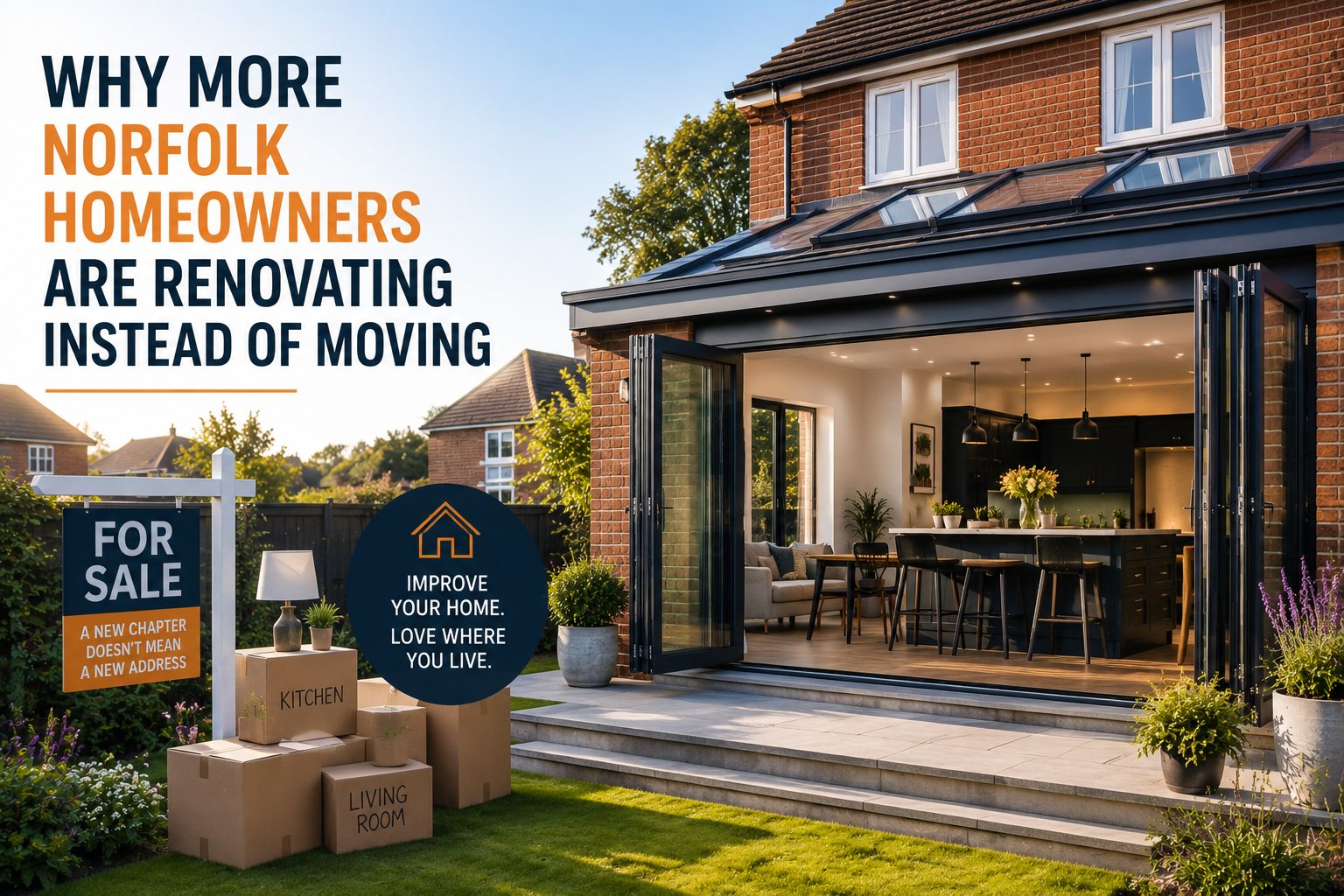
For many years, moving house was the natural solution when a property no longer met a family’s needs. Whether it was the arrival of children, the need for a home office, or simply wanting more living space, people often chose to relocate rather than improve their existing home.
Today, that trend is changing. Across Norfolk and the rest of the UK, more homeowners are choosing to renovate instead of move. Rising house prices, higher mortgage rates, increasing moving costs, and a greater appreciation for the homes and communities people already live in have all contributed to this shift.
While moving still makes sense in some situations, many homeowners are discovering that improving their current property offers better value, less disruption, and more control over the final result.
The Rising Cost of Moving
One of the biggest reasons people choose to renovate is the overall cost of moving.
Buying a new home involves far more than the purchase price. Homeowners also need to consider expenses such as:
Stamp Duty Land Tax (where applicable)
Estate agent fees
Solicitor’s fees
Survey costs
Mortgage arrangement fees
Removal companies
Utility transfers
Decorating and furnishing the new property
These costs can quickly add up to tens of thousands of pounds before any improvements are made to the new home.
For many families, investing a similar amount into improving their existing property provides far better value.
Higher Mortgage Rates Have Changed Decisions
Mortgage affordability has become a major factor in recent years. Many homeowners secured low fixed-rate mortgages several years ago. Moving often means replacing that mortgage with one at a significantly higher interest rate. Even if the new property isn’t much larger, monthly repayments can increase considerably. Instead of taking on larger borrowing, homeowners are asking a different question:
“Can we make our current home work better?”
In many cases, the answer is yes.
Families Need More Flexible Living Space
The way people use their homes has changed dramatically.
Many households now need space for:
Home offices
Hybrid working
Children’s study areas
Home gyms
Multi-purpose family rooms
Guest accommodation
Older property layouts don’t always suit modern lifestyles.
Rather than moving to gain an extra room, many homeowners are redesigning existing spaces or adding extensions that better suit the way they actually live.
Extensions Often Cost Less Than Moving
A carefully planned extension can add valuable living space while allowing families to remain in the neighbourhood they already enjoy.
Popular projects include:
Rear extensions
Side extensions
Kitchen extensions
Loft conversions
Garage conversions
These improvements often increase both the usability and value of the property.
For growing families, creating another bedroom or larger kitchen can solve space problems without the upheaval of relocating.
Norfolk Offers Homes Worth Investing In
Norfolk has a wide variety of housing, from Victorian terraces and traditional cottages to post-war family homes and newer developments.
Many of these properties have excellent potential for improvement.
Older homes often feature:
Large gardens
Spacious plots
Strong structural construction
Character features
Opportunities for extension
Instead of leaving these desirable locations, homeowners are choosing to modernise the properties they already own.
Emotional Attachment Matters
A home is much more than bricks and mortar.
Families often develop strong connections to:
Schools
Neighbours
Local parks
Community groups
Doctors
Shops
Daily routines
Moving means leaving many of these behind. Renovating allows homeowners to improve their property while keeping the lifestyle they’ve already built. For many people, that continuity is invaluable.
Renovation Allows Complete Personalisation
Buying another house usually involves compromise.
Perhaps the kitchen isn’t quite right.
The garden is too small.
The layout feels awkward.
The décor isn’t to your taste.
Renovating gives homeowners the opportunity to create spaces that work specifically for them.
Examples include:
Open-plan kitchens
Larger family bathrooms
Bespoke storage
Utility rooms
Energy-efficient upgrades
Garden rooms
Rather than adapting to someone else’s design choices, homeowners can shape their property around their own lifestyle.
Energy Efficiency Is Becoming More Important
Energy costs remain a major concern for UK households.
Many renovation projects now focus on improving efficiency rather than simply adding space.
Common upgrades include:
Better insulation
New windows
Roof improvements
Efficient heating systems
Improved ventilation
LED lighting
Smart heating controls
These improvements can reduce running costs while making homes more comfortable throughout the year.
They may also improve a property’s Energy Performance Certificate (EPC), which is increasingly important to buyers.
Renovations Can Increase Property Value
Not every renovation guarantees a profit, but many improvements can increase a home’s market value.
Projects that often provide strong returns include:
Kitchen renovations
Bathroom upgrades
Loft conversions
Extensions
Garage conversions
Quality landscaping
Roof maintenance
Energy-efficient improvements
The best projects are those that improve both everyday living and future resale appeal.
Planning Rules Can Make Extensions More Accessible
Many homeowners assume that extending automatically requires lengthy planning applications.
In reality, some projects fall under Permitted Development Rights, depending on the size and design of the extension and the property itself.
Even where planning permission is required, careful preparation and professional advice can make the process more straightforward than many people expect.
Understanding local planning policies early helps homeowners avoid unnecessary delays.
Renovating Is Often Less Disruptive Than Moving
Moving house is frequently ranked among life’s most stressful experiences.
Packing belongings, organising removals, completing legal paperwork, changing schools, updating addresses, and settling into a new area can take months.
Although renovation projects involve disruption, many families feel it is more manageable than relocating entirely.
Some improvements can even be completed while homeowners continue living in the property.
Outdoor Living Has Become More Valuable
The way people use gardens has also changed.
Many Norfolk homeowners are investing in:
Decking
Patios
Outdoor kitchens
Garden offices
Pergolas
Landscaping
Better lighting
These improvements effectively increase usable living space without extending the house itself.
For families who enjoy entertaining or spending time outdoors, improving the garden can have a significant impact on everyday life.
Renovation Supports Long-Term Living
Many homeowners are now thinking beyond immediate needs.
Rather than moving repeatedly as life changes, they’re adapting their current home for the future.
Examples include:
Ground-floor bathrooms
Wider doorways
Additional downstairs bedrooms
Accessible layouts
Better storage
Low-maintenance gardens
Planning ahead can allow people to remain comfortably in their homes for many more years.
Is Renovating Always Better Than Moving?
Not necessarily.
If your current property cannot realistically accommodate your family’s future needs, moving may still be the right decision.
Similarly, extensive structural work may not always be financially worthwhile.
Before making a decision, homeowners should consider:
The total cost of moving
The estimated renovation budget
Local property values
Planning restrictions
How long they intend to stay
Whether improvements are likely to add value
Comparing these factors often provides a clearer picture of which option offers the better long-term investment.
Final Thoughts
The growing trend towards renovation reflects changing priorities among homeowners. Rising moving costs, higher mortgage rates, evolving lifestyles, and a greater focus on energy efficiency have encouraged many families to make better use of the homes they already own.
For Norfolk homeowners, renovation often provides an opportunity to create additional space, improve comfort, reduce energy bills, and increase property value while remaining in the communities they know and enjoy. Whether it’s extending a family home, modernising an older property, or improving everyday functionality, thoughtful renovations can offer lasting benefits that go well beyond financial returns.
Choosing between moving and renovating is a personal decision, but for many households, investing in their existing home is proving to be the smarter, more practical option. By carefully planning improvements that suit both current and future needs, homeowners can create a property that continues to serve them well for many years to come.