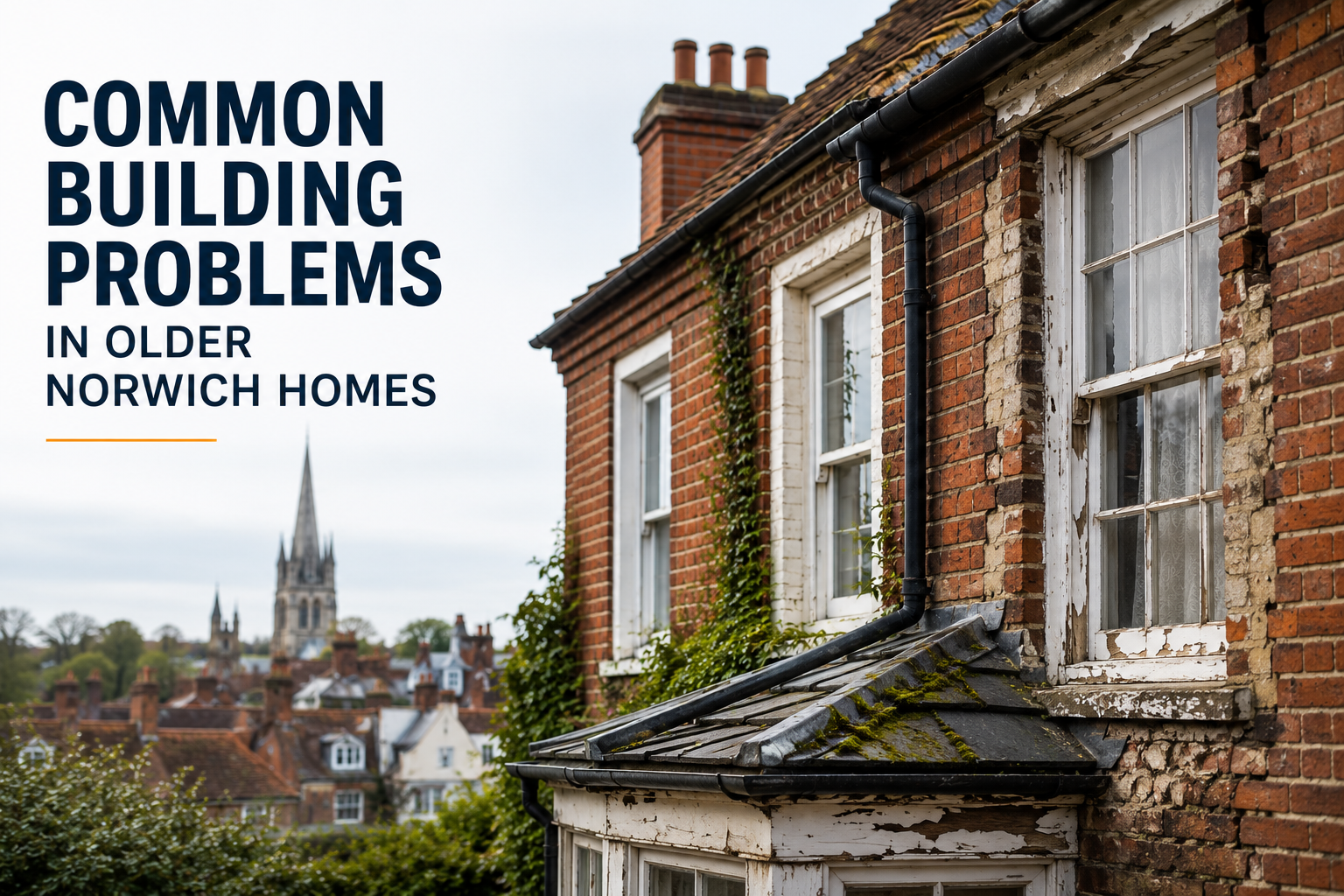
Norwich is one of the UK’s most historic cities, with a rich mix of Victorian terraces, Edwardian homes, Georgian townhouses, post-war properties, and charming cottages. These homes are full of character and often feature larger rooms, beautiful brickwork, timber details, and architectural features that are difficult to find in many modern developments.
However, older properties also come with their own set of challenges. Time, weather, changing building standards, and decades of alterations can all contribute to issues that require careful attention. Understanding the most common building problems can help homeowners identify concerns early, plan maintenance effectively, and avoid expensive repairs in the future.
Damp and Moisture Problems
One of the most common issues in older Norwich homes is damp. Many properties built before the early 20th century were constructed differently from modern homes. Traditional solid brick walls were designed to absorb and release moisture naturally, unlike modern cavity walls.
Damp can appear in several forms:
Rising damp
Penetrating damp
Condensation
Water ingress from damaged roofs or gutters
Signs to look out for include:
Peeling wallpaper
Flaking paint
Damp patches on walls
Musty smells
Black mould
Salt deposits on plaster
Not every damp problem has the same cause. For example, condensation caused by poor ventilation is very different from water entering through defective brickwork or roofing.
Identifying the true cause is essential before carrying out repairs.
Roofing Issues
Many older homes still have original or ageing roofs.
Common roofing problems include:
Missing or slipped tiles
Worn ridge tiles
Damaged flashing
Blocked gutters
Rotten fascias and soffits
Leaking valleys
Moss build-up
Even a small roof defect can allow water to enter the loft, eventually damaging insulation, timber, ceilings, and internal walls. Regular roof inspections can often identify problems before they become expensive.
Timber Decay
Traditional homes contain large amounts of timber, including:
Roof structures
Floor joists
Staircases
Window frames
Doors
When timber is exposed to moisture for prolonged periods, it can become vulnerable to rot.
There are two main types:
Wet rot
Dry rot
Wood-boring insects such as woodworm may also affect older timber if conditions are suitable. The good news is that many timber problems can be repaired if caught early.
Structural Movement
Small cracks are common in many older buildings and are not always a cause for concern. However, larger or widening cracks may indicate structural movement.
Possible causes include:
Settlement
Tree roots
Clay soil movement
Water leaks
Foundation problems
Older Norwich homes have often experienced decades of natural movement. Monitoring cracks over time helps determine whether they are historic or still active. Professional assessment may be needed if cracks continue growing.
Outdated Electrical Systems
Electrical standards have changed significantly over the years.
Older properties may still contain:
Old consumer units
Limited electrical sockets
Ageing wiring
Inadequate earthing
Older lighting circuits
While older wiring isn’t automatically unsafe, electrical systems should be assessed periodically to ensure they continue meeting modern safety requirements. Homes built many decades ago were never designed for today’s electrical demands.
Plumbing and Heating Problems
Older plumbing systems may include ageing pipework, outdated boilers, or inefficient heating layouts.
Common issues include:
Low water pressure
Corroded pipes
Slow heating
Uneven radiator temperatures
Water leaks
Modern heating upgrades can improve comfort while reducing energy consumption.
Poor Insulation
Many older properties were built long before modern energy efficiency standards existed.
Heat loss commonly occurs through:
Roofs
Walls
Floors
Windows
Doors
As a result, some older homes can be expensive to heat during winter.
Fortunately, there are several sympathetic ways to improve insulation while preserving the character of traditional buildings.
Brickwork and Mortar Deterioration
Brickwork naturally weathers over time.
In older homes, mortar joints may gradually deteriorate due to decades of exposure to rain, frost, and temperature changes.
Signs include:
Crumbling mortar
Loose bricks
Vegetation growing from joints
Water penetration
Repointing damaged mortar helps protect brickwork from further deterioration.
It’s important that the correct mortar is used, particularly on historic buildings, as modern cement mortars may not always be suitable for older properties.
Window and Door Problems
Many traditional homes feature beautiful timber windows and doors.
Over time these may develop:
Draughts
Rot
Sticking frames
Broken glazing
Worn seals
Replacing windows isn’t always necessary.
In many cases, careful repair and maintenance can preserve original features while improving energy efficiency.
Drainage Issues
Older drainage systems may develop problems as they age.
Common issues include:
Blocked drains
Cracked pipes
Root intrusion
Poor drainage
Slow-flowing waste pipes
Drainage problems often become noticeable after periods of heavy rainfall.
Early investigation helps prevent water damage and foundation issues.
Chimney Maintenance
Many older Norwich homes still retain original chimneys, even if fireplaces are no longer used.
Common issues include:
Loose chimney pots
Damaged flashing
Cracked brickwork
Worn pointing
Water ingress
Because chimneys are fully exposed to the weather, they often require more maintenance than other parts of the building.
Inadequate Ventilation
Older homes were often naturally ventilated through open fireplaces, timber windows, and traditional construction methods.
Modern upgrades such as double glazing and improved insulation sometimes reduce natural airflow.
Without adequate ventilation, homeowners may notice:
Condensation
Mould
Damp smells
Poor indoor air quality
Balancing insulation with effective ventilation is important for maintaining a healthy indoor environment.
Previous DIY Alterations
Many older homes have undergone numerous alterations over several decades.
Not all work may have been completed to modern standards.
Examples include:
Removed walls
Altered plumbing
Poor electrical work
Inadequate structural support
Poor-quality extensions
If purchasing an older property, surveys can help identify previous alterations that may require further investigation.
Foundation and Ground Conditions
Parts of Norfolk have varying soil conditions that can affect older properties differently. Seasonal moisture changes may influence ground movement, particularly during prolonged dry or wet periods. While significant foundation problems are relatively uncommon, any signs of ongoing movement should be investigated promptly.
Preventative Maintenance Makes a Difference
One of the biggest mistakes homeowners make is ignoring small problems.
Minor defects such as:
A slipped roof tile
A leaking gutter
Small cracks
Loose pointing
Poor ventilation
can gradually develop into much larger and more expensive repairs. Routine inspections allow maintenance to be planned before serious damage occurs.
Older Homes Still Offer Outstanding Value
Despite these common issues, older Norwich homes remain highly desirable.
Many offer:
Larger rooms
Better-quality materials
Character features
Mature gardens
Strong communities
Excellent locations
With proper maintenance, these properties can continue performing well for generations.
Final Thoughts
Owning an older property comes with both responsibilities and rewards. While homes in Norwich often require more ongoing maintenance than newer builds, they also offer charm, craftsmanship, and architectural character that many homeowners value highly.
The most common building problems such as damp, roofing defects, ageing timber, outdated services, poor insulation, and worn brickwork are often manageable when identified early. Regular inspections, timely repairs, and an understanding of how traditional buildings perform can help prevent small issues from becoming major expenses.
Rather than viewing these challenges as disadvantages, homeowners should see them as part of preserving the history and character of their property. With careful maintenance and informed decision-making, older Norwich homes can remain comfortable, efficient, and structurally sound while continuing to provide an exceptional place to live for many years to come.