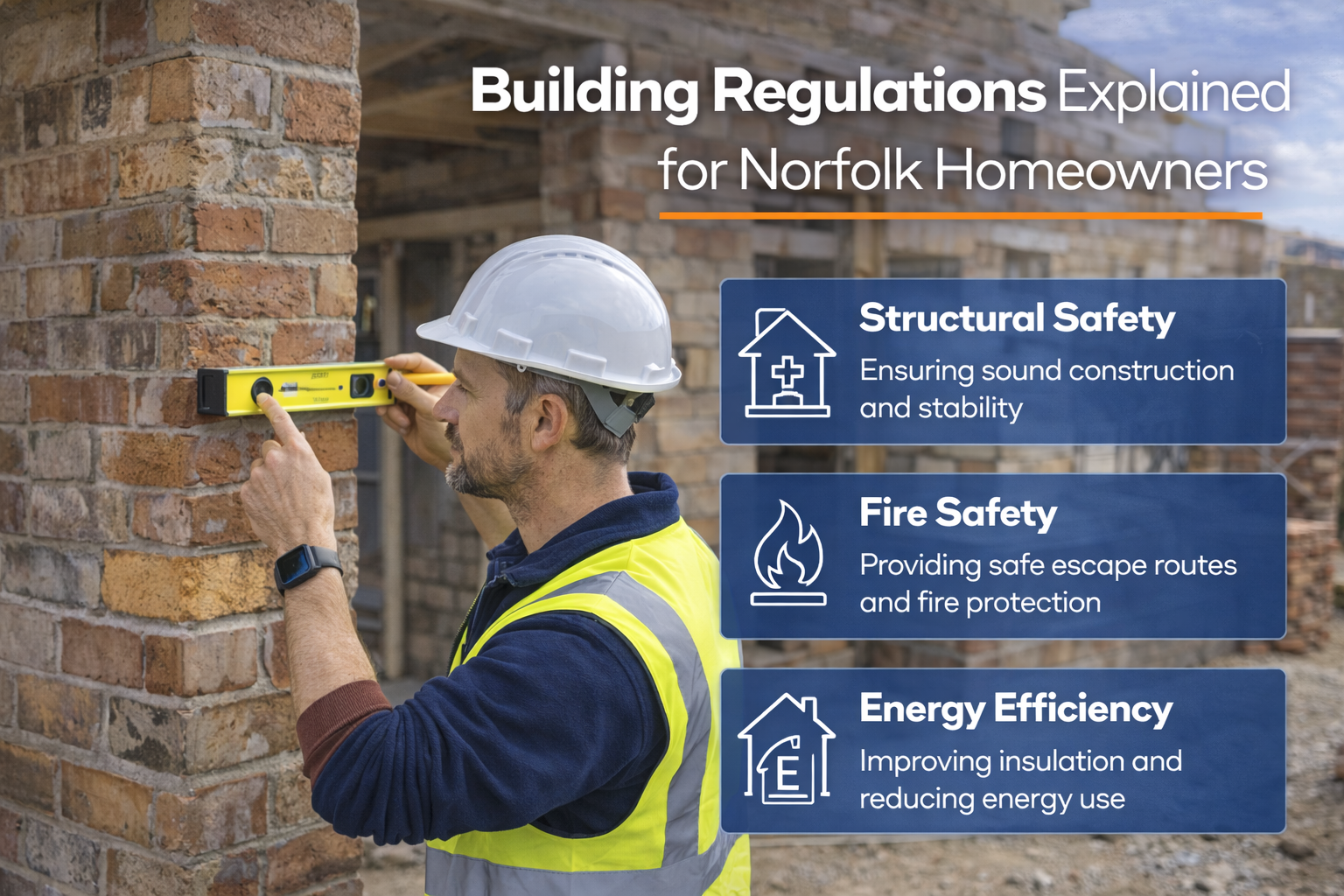
When planning building work on your home, most people focus on design, cost and planning permission. However, building regulations are just as important. They ensure that construction work is safe, energy efficient and structurally sound.
In Norfolk, as in the rest of England, building regulations apply to a wide range of domestic projects, from extensions and loft conversions to electrical alterations and replacement windows. Understanding what they cover and how the approval process works can help you avoid delays, unexpected costs and compliance issues later.
This guide explains building regulations clearly and practically for homeowners across Norfolk.
What Are Building Regulations?
Building regulations are national standards that set minimum requirements for construction work. They are designed to protect:
- The safety of occupants
- Structural integrity
- Energy efficiency
- Fire safety
- Ventilation and drainage
- Accessibility
They are separate from planning permission. You may not need planning approval for certain projects, but building regulations approval is still likely to be required.
Planning controls how a building looks and its impact on the surrounding area. Building regulations control how it is built.
What Types of Work Require Building Regulations Approval?
Many homeowners are surprised at how broadly building regulations apply. Projects that typically require approval include:
- Home extensions
- Loft conversions
- Garage conversions
- Structural alterations such as removing load bearing walls
- New bathrooms or kitchens involving drainage changes
- Rewiring or major electrical works
- Replacement windows and doors
- Roof replacements
- Installation of boilers
- Underfloor heating systems
Even relatively small structural changes, such as widening a doorway in a load bearing wall, can trigger regulatory requirements.
The Key Areas Covered by Building Regulations
Building regulations are divided into approved documents, each covering a different aspect of construction. The most relevant for homeowners include:
Part A: Structure
This ensures the building is structurally stable. It covers:
- Foundations
- Load bearing walls
- Steel beams
- Roof structures
- Floor construction
Structural calculations from an engineer are usually required when altering or adding to the structure.
Part B: Fire Safety
Fire safety rules address:
- Means of escape
- Fire doors
- Smoke alarms
- Fire-resistant materials
- Escape windows in loft conversions
In multi-storey homes, adding a loft conversion often requires upgraded fire protection to lower floors.
Part C: Site Preparation and Moisture Resistance
This deals with damp proofing, drainage, and protecting buildings from ground moisture.
Part L: Conservation of Fuel and Power
Energy efficiency standards apply to:
- Insulation levels
- Windows and doors
- Heating systems
- Air tightness
Recent updates have increased insulation and energy performance requirements, particularly for extensions and new builds.
Part P: Electrical Safety
Electrical work must meet strict safety standards. Most electrical installations in homes must either:
- Be carried out by a registered electrician who can self-certify
- Be inspected by building control
Part F: Ventilation
Proper ventilation is required in kitchens, bathrooms and airtight properties to prevent condensation and mould.
How Do You Apply for Building Regulations Approval?
There are two main routes:
1. Full Plans Application
This involves submitting detailed drawings and specifications before work begins. The plans are checked and formally approved.
Advantages:
- Greater certainty before construction
- Issues identified early
- Clear documentation for future property sales
This route is common for extensions, loft conversions and major structural projects.
2. Building Notice
This is a simplified process where work can begin shortly after notifying building control.
Advantages:
- Faster initial process
- Suitable for smaller projects
However, there is less certainty upfront, and unexpected changes may be required during construction.
For larger projects, the full plans route is usually recommended.
Who Carries Out Inspections?
In Norfolk, inspections can be conducted by:
- The local authority building control department
- An approved private building inspector
Councils such as Norwich City Council, Broadland District Council, South Norfolk Council and North Norfolk District Council each operate building control services.
Inspections take place at key stages, including:
- Excavation for foundations
- Pouring of concrete
- Installation of structural elements
- Insulation placement
- Drainage works
- Final completion
Work must not proceed past certain stages until it has been inspected and signed off.
What Happens at Completion?
When the project is finished and all inspections have been passed, a completion certificate is issued.
This document is important because:
- It confirms compliance with regulations
- It may be required by mortgage lenders
- It will be requested during property sales
Missing certificates can cause significant complications when selling a home.
Common Mistakes Homeowners Make
Understanding common pitfalls can help prevent delays.
Starting Work Without Approval
Beginning construction before notifying building control can lead to enforcement action. In some cases, completed work may need to be opened up for inspection.
Assuming Planning Permission Covers Building Regulations
They are separate systems. Planning approval does not automatically mean the work complies structurally or thermally.
Failing to Budget for Compliance Upgrades
For example, adding an extension may require:
- Upgraded insulation
- Improved ventilation
- Structural reinforcement
These are not optional extras. They are legal requirements.
Using Unqualified Trades
Certain work, such as gas and electrical installations, must be carried out by properly registered professionals.
Building Regulations and Energy Efficiency in Norfolk
Energy standards have become increasingly important. Insulation levels in walls, roofs and floors must meet strict performance targets.
For example:
- Cavity wall insulation thickness may increase
- Roof insulation may need to exceed older standards
- New glazing must meet thermal performance ratings
In rural Norfolk, where many homes are older or built with traditional materials, upgrades must balance performance with structural integrity.
Improving energy efficiency not only ensures compliance but can reduce long term heating costs.
What About Older or Listed Properties?
Listed buildings and historic properties are common throughout Norfolk.
While building regulations still apply, flexibility may be considered where strict compliance would harm the building’s character.
For example:
- Breathable insulation systems may be used
- Alternative materials may be approved
- Structural reinforcement may be adapted
Coordination between conservation officers and building control is often necessary.
The Importance of Coordinated Project Management
Building regulations compliance requires coordination between:
- Designers
- Structural engineers
- Contractors
- Inspectors
If communication breaks down, inspections can be missed or works may not meet requirements.
A fully managed construction approach ensures that regulatory compliance is integrated into the build from the outset rather than treated as an afterthought. This reduces delays and ensures that inspections are booked at the correct stages.
Norfolk Building operates using this accountable, end to end model, overseeing planning, compliance and construction through its own managed team rather than simply introducing independent trades.
How Long Does the Process Take?
Timeframes vary depending on project complexity.
- Plan checking typically takes up to five weeks
- Inspections occur throughout construction
- Completion certificates are issued after final inspection
Delays usually occur when drawings lack detail or when structural information is incomplete.
Submitting accurate documentation from the beginning helps keep projects on track.
Final Thoughts
Building regulations are not just administrative hurdles. They exist to protect homeowners, ensure safety and maintain construction standards.
Whether you are adding an extension, converting a loft or upgrading a heating system, compliance is essential. Understanding the approval process, inspection stages and documentation requirements will help you avoid costly mistakes.
By treating building regulations as an integral part of the project rather than a last minute formality, homeowners in Norfolk can move forward with confidence, knowing their property is safe, compliant and built to last.