Construction projects have become more complex in recent years. Homeowners are no longer just looking for a contractor to complete isolated tasks. They want coordinated delivery, technical knowledge, regulatory compliance and clear accountability from start to finish.
In 2026, the demand for structured, fully managed building services continues to grow across Norfolk and surrounding areas. From high specification kitchens to structural renovations and specialist installations, projects now require careful planning and professional oversight.
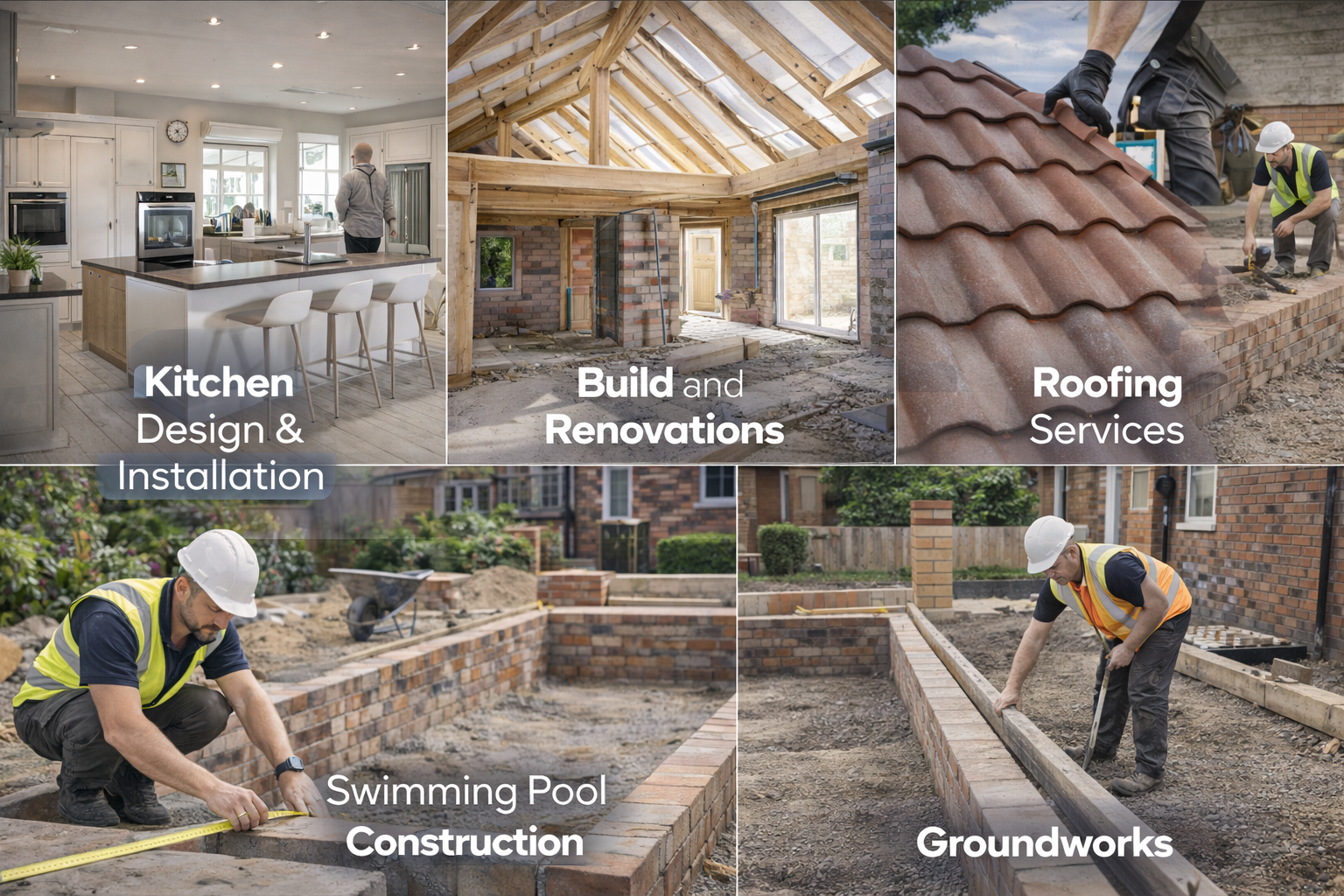
This guide explains five core services delivered in 2026, outlining what each involves and why professional management is critical to long term success.
Kitchen Design with Installation
A kitchen is no longer just a functional space. It is often the centre of the home, combining cooking, dining and social areas into one integrated environment. Kitchen design and installation involve far more than fitting cabinets. A properly managed project includes:
- Measured surveys
- Layout optimisation
- Structural alterations if required
- Electrical planning
- Plumbing configuration
- Ventilation and extraction design
- Lighting schemes
- Flooring installation
- Appliance integration
Many kitchen projects require wall removals to create open plan layouts. This can involve structural steel beams, building regulation approval and careful sequencing of trades.
Installation quality is critical. Poorly aligned units, incorrect appliance fitting or inadequate ventilation can lead to long term issues. Precise measurement, level flooring and accurate service positioning all contribute to durability and performance.
In 2026, energy efficiency and smart integration also play a growing role. Induction systems, integrated lighting controls and sustainable materials are increasingly common features.
A coordinated kitchen project ensures design intent aligns with technical installation, reducing delays and preventing costly rework.
Build and Renovations
Build and renovation projects range from structural alterations to full property transformations.
This category typically includes:
- Home extensions
- Loft conversions
- Garage conversions
- Internal reconfigurations
- Period property restorations
- Structural wall removals
Each renovation project begins with structural assessment and planning compliance. Foundations, insulation standards, fire regulations and drainage requirements must all be considered.
Renovating older properties in Norfolk often presents additional challenges such as:
- Uneven floors
- Solid wall construction
- Damp management
- Listed building constraints
Careful sequencing is essential. Structural work must be completed before services are installed. Inspections must be scheduled at key stages. Building regulations compliance must be integrated from the outset.
Renovation projects can quickly become stressful when multiple trades operate independently. A unified project structure ensures consistent quality control and timeline management.
Norfolk Building delivers build and renovation projects using an accountable team model, overseeing planning, compliance and construction rather than simply coordinating separate contractors.
Roofing Services
A roof protects the entire structure of a building. Faults in roofing systems can lead to water damage, insulation failure and structural deterioration.
Roofing services in 2026 include:
- New roof installations
- Full roof replacements
- Pitched roof systems
- Flat roofing systems
- Roof structure alterations
- Loft truss modifications
- Insulation upgrades
Roof replacements often require scaffolding coordination, structural inspection and compliance with updated thermal regulations.
Flat roofs now commonly use modern membrane systems that improve durability compared to older felt designs. Pitched roofs require precise alignment, correct tile selection and proper ventilation to prevent condensation.
Structural timber integrity is also critical. Damaged rafters or inadequate truss design can compromise long term stability.
Roofing projects must account for:
- Weather exposure
- Material lead times
- Safe access
- Building regulation requirements
Careful scheduling ensures that properties are protected from the elements throughout the process.
Swimming Pool Construction
Swimming pool construction is one of the most technically demanding residential projects.
Whether outdoor or indoor, a pool requires:
- Ground excavation
- Structural engineering
- Reinforced concrete or specialist shell systems
- Waterproofing
- Filtration and circulation systems
- Electrical installation
- Heating integration
- Drainage planning
- Landscaping coordination
Soil conditions and groundwater levels must be assessed before excavation begins. Structural engineering calculations are essential to prevent long term movement or cracking.
Indoor pools introduce additional complexity through humidity control and ventilation systems. Without proper airflow design, condensation can damage surrounding structures.
Outdoor pools must also consider:
- Planning rules
- Noise management
- Safety measures
- Surface water drainage
Integration with surrounding patios, decking and landscaping requires coordinated sequencing to ensure a cohesive finish.
Because of the scale and technical requirements, pool construction benefits significantly from centralised project management and experienced oversight.
Groundworks
Groundworks form the foundation of nearly every construction project. Errors at this stage can affect the entire build.
Groundworks services include:
- Site clearance
- Excavation
- Foundations
- Drainage systems
- Concrete slabs
- Driveways
- External hard landscaping
- Retaining walls
Accurate setting out is essential to ensure structural alignment. Drainage must comply with regulations and connect properly to mains systems or approved soakaways.
In parts of Norfolk, soil type and water table levels influence foundation design. Clay soils may require deeper footings. Flood risk areas may require additional drainage solutions.
Groundworks must also coordinate with building control inspections before concrete is poured.
Strong foundations create long term structural reliability. Poor groundwork creates expensive corrective work later.
Additional Services Supporting Core Projects
Beyond the five primary services, a number of specialist trades contribute to complete project delivery.
Carpentry Services
Carpentry includes structural timber framing, door installation, staircases, bespoke storage solutions and finishing details. Precision carpentry ensures alignment and durability.
Electrical Services
Electrical installation covers rewiring, lighting systems, fuse board upgrades, underfloor heating controls and compliance with safety regulations.
Tiling and Grouting
Tiling requires careful surface preparation and precise layout. Correct waterproofing in bathrooms and kitchens prevents moisture damage.
Design and Planning
Design and planning services include measured drawings, planning application support, structural coordination and building regulation documentation.
Early stage design clarity prevents costly adjustments during construction.
Why Fully Managed Delivery Matters
Construction projects are rarely straightforward. They involve coordination between structural work, services, finishes and regulatory inspections.
When responsibility is fragmented, communication gaps emerge. Delays, cost overruns and quality issues often follow.
A fully managed model ensures:
- One accountable leadership structure
- Integrated scheduling
- Structured quality checks
- Compliance oversight
- Clear communication
Norfolk Building operates through its own coordinated team structure, delivering projects end to end rather than functioning as a referral or listing platform.
Final Thoughts
In 2026, homeowners expect more than basic construction. They expect structured planning, technical precision and accountable delivery.
Kitchen design with installation, structural builds and renovations, roofing services, swimming pool construction and groundworks form the backbone of comprehensive residential construction services.
Each area requires technical knowledge, regulatory awareness and disciplined project management. When delivered through an integrated team with clear responsibility from start to finish, construction becomes far more predictable and controlled.
Well managed building work is not simply about completing tasks. It is about delivering lasting quality, structural integrity and long term value.